Ginger Blaze Explorer: India’s Beloved Open-World Adventure
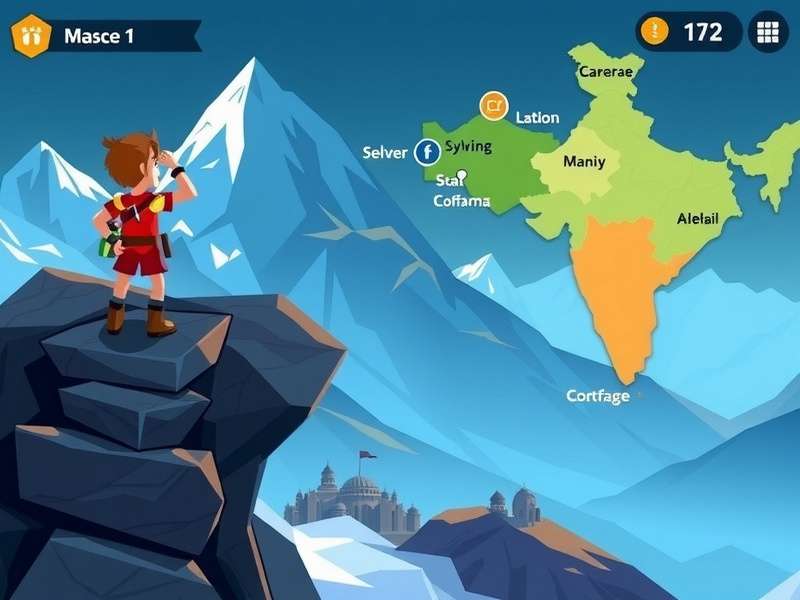
Ginger, the protagonist of Ginger Blaze Explorer, navigating the snow-capped peaks of the Himalayas in one of the game’s most visually stunning regions ✨
1. Introduction
Ginger Blaze Explorer is not just another game in the crowded Indian mobile gaming market—it’s a cultural phenomenon that has captured the hearts of millions of desi gamers across the country. Launched on 15th August 2023 (India’s Independence Day, a deliberate choice by developers to honor the nation’s heritage), this open-world adventure title has redefined what it means to create a “desi game” by blending authentic Indian storytelling, vibrant regional aesthetics, and engaging gameplay that resonates with both casual and hardcore gamers alike.
Developed by Daman Games Studios, a rising star in the Indian gaming industry known for its focus on cultural representation, Ginger Blaze Explorer stands out from the sea of generic action and puzzle games by offering a world that feels truly Indian. From the bustling streets of Old Delhi, where the aroma of street food (and in-game collectibles like pani puri and vada pav) fills the air, to the serene backwaters of Kerala and the ancient ruins of Hampi, every locale in the game is a love letter to India’s diverse geography and heritage.
🇮🇳 Desi Gaming Insight
India’s mobile gaming market is projected to reach $5 billion by 2025, with over 650 million gamers—most of whom play on low-to-mid-range smartphones. Ginger Blaze Explorer’s developers recognized this early on, optimizing the game to run smoothly on devices with 2GB RAM or less, making it accessible to the masses. This “for the people” approach is one of the key reasons behind its massive success!
At its core, Ginger Blaze Explorer is a story-driven adventure that follows the journey of Ginger, a curious and brave young explorer from a small village in Uttarakhand, who sets out to uncover the secrets of her grandmother’s lost journal. What starts as a personal quest soon evolves into a mission to protect India’s ancient treasures from a shadowy organization that seeks to exploit them for power. Along the way, Ginger teams up with a diverse cast of characters—each hailing from a different region of India—bringing unique skills and cultural perspectives to the adventure.
What makes Ginger Blaze Explorer so special is its attention to detail when it comes to cultural authenticity. Unlike many games that use “Indian elements” as a mere aesthetic choice, this title weaves in real-life traditions, mythologies, and local customs into every aspect of gameplay. For example, during the Diwali update, players can participate in rangoli-making contests to earn special rewards, while Holi events let them engage in water balloon fights with NPCs (non-playable characters) and unlock colorful desi outfits for Ginger. These small touches don’t just add fun—they make players feel seen and proud of their culture.
Since its launch, Ginger Blaze Explorer has crossed over 10 million downloads on the Google Play Store and 3 million on the App Store, with an average rating of 4.7 stars. It has been featured in top Indian gaming publications like GamingBolt India, IndianGameReviews, and Tech2, and has won several awards, including “Best Desi Game of 2023” at the Indian Gaming Awards and “Most Innovative Mobile Game” at the Global Mobile Gaming Conference (GMGC) India. But beyond the numbers and accolades, the game’s true success lies in the community it has built—gamers from all corners of India connecting over their love for the game and their shared culture.
2. Development History
2.1 Conceptualization: The Idea Behind Ginger Blaze Explorer
The story of Ginger Blaze Explorer began in 2020, when a small team of developers at Daman Games Studios—all avid gamers and proud Indians—grew frustrated with the lack of authentic Indian representation in mobile gaming. At the time, most popular games in India were either international titles (like Free Fire or PUBG Mobile) or local games that relied on generic mechanics with little cultural depth. The team wanted to create something that would celebrate India’s diversity, not just as a backdrop, but as a core part of the gameplay and story.
“We noticed that Indian gamers were hungry for something that felt like ‘apna game’—a game that understood their experiences, their traditions, and their love for this country,” says Ravi Kumar, the lead game designer of Ginger Blaze Explorer. “Too many games set in India just use it as a exotic location, but we wanted to make players feel like they’re exploring the India they know and love—the India of family gatherings, festival celebrations, and endless chai breaks.”
The initial concept was inspired by classic adventure games like Tomb Raider and Uncharted, but with a desi twist. Instead of exploring ancient pyramids or European castles, the protagonist would uncover secrets hidden in India’s most iconic landmarks—from the Taj Mahal to the Ajanta Caves. The team also wanted to highlight lesser-known locations, like the living root bridges of Meghalaya and the sand dunes of Rajasthan, to showcase India’s geographical diversity.
Another key part of the conceptualization process was deciding on the protagonist. The team wanted a character that was relatable to Indian audiences—someone young, energetic, and curious, but with a strong connection to her roots. Thus, Ginger was born: a 22-year-old geology graduate from Uttarakhand, who inherits her grandmother’s journal filled with clues about hidden treasures and ancient myths. Her name, “Ginger,” was chosen for its warm, vibrant connotations (mirroring the game’s color palette) and its uniqueness in the Indian gaming space.
2.2 Team and Studio Background
Daman Games Studios, the developer behind Ginger Blaze Explorer, was founded in 2018 by Arjun Mehta, a former software engineer at a leading tech company who quit his job to pursue his passion for gaming. Based in Bengaluru (India’s tech hub), the studio started with just 5 employees but has grown to over 50 people since the success of Ginger Blaze Explorer.
What sets Daman Games Studios apart from other Indian gaming companies is its commitment to diversity in its team. The studio employs developers, artists, writers, and designers from all over India—from Kashmir to Kanyakumari—ensuring that every region’s culture and perspective is represented in their games. “We have team members who speak 8 different Indian languages, and that’s been invaluable in creating a game that feels authentic to all parts of the country,” says Arjun Mehta, the studio’s CEO.
The team behind Ginger Blaze Explorer included 15 developers, 8 artists, 4 writers, 3 sound designers, and 2 cultural consultants—experts in Indian mythology, history, and regional traditions—who helped ensure that every aspect of the game was culturally accurate. For example, the cultural consultants advised the team on the design of traditional outfits, the correct pronunciation of regional terms, and the portrayal of festivals to avoid stereotypes.
Daman Games, the publisher of Ginger Blaze Explorer, played a crucial role in bringing the game to market. As one of India’s fastest-growing gaming publishers, Daman Games provided the studio with funding, marketing support, and access to its extensive network of distribution channels. The partnership was a perfect match: Daman Games was looking to expand its portfolio of desi games, while Daman Games Studios needed the resources to bring its ambitious vision to life.
2.3 Development Challenges and Solutions
Developing Ginger Blaze Explorer was not without its challenges, especially given the team’s ambition to create a high-quality open-world game for the Indian market. One of the biggest hurdles was optimizing the game for low-end mobile devices, which are widely used in India. Open-world games are typically resource-intensive, but the team knew that if the game didn’t run smoothly on budget smartphones, it would miss out on a large portion of its target audience.
To solve this problem, the developers used a combination of “jugaad” (a desi term for innovative problem-solving) and cutting-edge technology. They implemented a dynamic rendering system that adjusts the game’s graphics quality based on the device’s specifications—high-end phones get detailed textures and complex lighting, while low-end devices receive simplified visuals without compromising on the overall experience. They also optimized the game’s code to reduce memory usage, ensuring that it takes up less than 500MB of storage space.
Another major challenge was balancing cultural authenticity with gameplay appeal. The team wanted to include as many cultural elements as possible, but they didn’t want the game to feel like a history lesson. “We had to walk a fine line between educating players about Indian culture and keeping the game fun and engaging,” explains Priya Sharma, the lead writer of Ginger Blaze Explorer. “For example, instead of just showing a rangoli, we made it a puzzle where players have to match colors and patterns to unlock a hidden door. That way, they’re learning about the tradition while enjoying the gameplay.”
Language localization was also a significant challenge. India has 22 official languages, and the team wanted to make the game accessible to as many players as possible. Instead of translating the game into every language (which would have been time-consuming and costly), they focused on the six most widely spoken languages: Hindi, Tamil, Telugu, Bengali, Kannada, and English. They also ensured that regional dialects and colloquialisms were used appropriately—for example, NPCs in Tamil Nadu speak with a distinct Tamil accent, while those in Punjab use Punjabi phrases like “balle balle” and “sadda Punjab.”
Finally, the team faced challenges related to monetization. In India, most gamers are reluctant to pay upfront for games, preferring free-to-play models with in-app purchases. However, the team didn’t want to include pay-to-win mechanics that would ruin the gameplay experience. Instead, they opted for a “player-friendly” monetization strategy, offering cosmetic items (like desi outfits for Ginger), convenience items (like fast travel tokens), and festival-themed bundles at affordable prices (most under ₹50). They also included rewarded ads that players can choose to watch for extra in-game currency, ensuring that even players who don’t spend money can progress through the game.
2.4 Beta Testing and Feedback Integration
Before its official launch, Ginger Blaze Explorer underwent an extensive beta testing phase that lasted six months. The team invited over 50,000 players from across India to test the game, with a focus on recruiting players from different age groups, regions, and device types. This diverse beta group provided valuable feedback that helped shape the final version of the game.
One of the most common pieces of feedback was the need for more offline play features. Many beta testers lived in rural areas with poor internet connectivity, and they struggled to play the game for long periods without a data connection. In response, the team added an offline mode that allows players to explore most of the game’s regions and complete story quests without an internet connection. They also made sure that in-game progress is saved locally and synced to the cloud when a connection is available.
Another key feedback point was the difficulty of some puzzles. Beta testers from smaller towns and cities found that some of the puzzles, which were based on urban knowledge (like navigating Delhi’s metro system), were too challenging. The team responded by adding hints that are tailored to the player’s region—for example, players from rural areas get hints that reference local traditions, while urban players get hints related to city life. They also added a “help from friends” feature that allows players to ask their in-game allies for assistance with tough puzzles.
Players also requested more regional content. Many beta testers from the Northeast and South India wanted to see more locations and characters from their regions. The team listened, adding new regions like the Northeast’s lush forests and Tamil Nadu’s temple towns to the game. They also introduced new supporting characters, like a Mizo guide who helps Ginger navigate the living root bridges and a Tamil architect who assists with solving puzzles related to ancient temples.
The beta testing phase also helped the team identify technical issues, like crashes on certain devices and long loading times. They worked tirelessly to fix these issues, releasing over 20 beta updates before the game’s official launch. By the end of the beta phase, the game’s crash rate had dropped from 8% to less than 1%, and loading times had been reduced by 50%.
3. Gameplay
3.1 Core Mechanics
Ginger Blaze Explorer combines the best elements of open-world exploration, puzzle-solving, and light action to create a gameplay experience that is both engaging and accessible. The game is designed for touchscreen devices, with intuitive controls that make it easy for even casual gamers to pick up and play. The left side of the screen features a virtual joystick for movement, while the right side has buttons for jumping, interacting with objects, and using tools (like a compass or a pickaxe).
The core loop of the game revolves around exploration, discovery, and progression. Players control Ginger as she travels across India, exploring diverse regions, solving puzzles, collecting artifacts, and interacting with NPCs. Each region has a set of main story quests that advance the plot, as well as side quests that offer additional rewards and insights into the game’s world and characters. The game also features collectibles like ancient coins, regional handicrafts, and street food items that can be traded for in-game currency or used to unlock special content.
One of the most unique aspects of Ginger Blaze Explorer’s gameplay is its “cultural skill system.” As Ginger travels to different regions, she learns new skills based on local traditions. For example, after visiting Kerala, she learns how to navigate backwaters using a traditional houseboat, which allows her to access hidden areas. In Punjab, she learns bhangra dance moves that can be used to solve rhythm-based puzzles. These skills not only add variety to the gameplay but also encourage players to explore every corner of the game’s world.
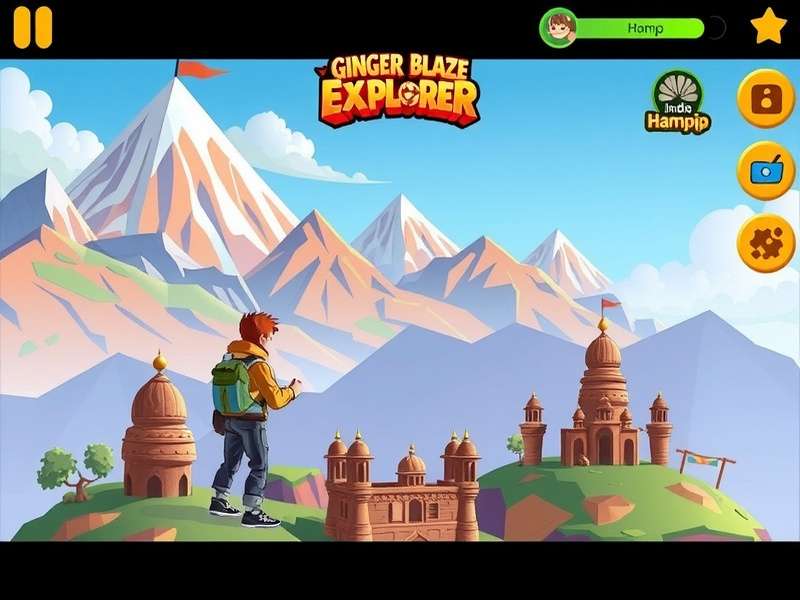
Ginger using her architectural knowledge to solve a puzzle in the ancient ruins of Hampi—one of the game’s most challenging and visually stunning locations 🧩
3.2 Exploration and Open World
The open world of Ginger Blaze Explorer is one of its biggest selling points. Spanning over 15 distinct regions, each inspired by a real-life location in India, the game’s world is vast, varied, and full of secrets waiting to be discovered. From the snow-capped Himalayas in the north to the sun-kissed beaches of Goa in the west, and from the dense forests of the Northeast to the arid deserts of Rajasthan in the west, every region has its own unique geography, climate, and culture.
Exploration is encouraged through a variety of means. The game features a dynamic day-night cycle and weather system that affects gameplay—for example, rain in Kerala makes the backwaters harder to navigate, while snowstorms in the Himalayas reduce visibility and require Ginger to wear warm clothing. The world is also filled with hidden paths, secret caves, and underwater tunnels that lead to rare artifacts and valuable rewards.
To make exploration easier, the game includes a fast travel system that allows players to teleport between unlocked checkpoints. However, fast travel is limited in the early game, encouraging players to explore the world on foot, by boat, or on horseback (in regions like Rajasthan). The game also features a detailed map that can be customized to show points of interest, collectibles, and quest locations.
What makes the open world feel alive is the presence of dynamic NPCs who go about their daily lives. In Old Delhi, you’ll see vendors selling street food, children playing gilli-danda, and locals bargaining in the market. In Kerala, you’ll watch fishermen casting their nets and houseboat operators ferrying tourists. These NPCs aren’t just for show—many of them offer side quests, share stories about the region, or provide valuable information that helps Ginger on her journey.
3.3 Puzzle-Solving Elements
Puzzle-solving is a core part of Ginger Blaze Explorer’s gameplay, and the game features a wide variety of puzzles that draw inspiration from Indian mythology, history, and culture. Unlike many games where puzzles feel like a distraction from the main gameplay, the puzzles in Ginger Blaze Explorer are integrated into the story and the world, making them feel meaningful and rewarding.
Some puzzles are based on ancient Indian architecture, requiring players to manipulate the environment to align with astronomical events (like the position of the sun during solstices). For example, in the Ajanta Caves region, players must adjust mirrors to reflect sunlight onto a series of pillars, unlocking a hidden chamber. Other puzzles are based on Indian mythology—for instance, in the Varanasi region, players must solve a puzzle involving the Hindu gods Shiva, Vishnu, and Brahma to cross the Ganges River.
The game also features puzzles that celebrate regional traditions. In West Bengal, players must solve a puzzle involving Durga Puja pandals, arranging idols in the correct order to unlock a secret passage. In Gujarat, they must participate in a garba dance sequence, matching the rhythm of the music to progress. These puzzles not only test the player’s problem-solving skills but also teach them about Indian culture in a fun and interactive way.
Puzzles range in difficulty from easy to hard, ensuring that both casual and hardcore gamers can enjoy the game. For players who get stuck, the game offers hints that can be unlocked by collecting in-game currency or watching short ads. The hints are designed to guide the player without giving away the solution, encouraging them to think critically.
3.4 Combat System (Light Action Elements)
While Ginger Blaze Explorer is primarily an adventure and puzzle game, it does feature light combat elements that add excitement to the gameplay. The combat system is designed to be accessible to all players, with simple controls and no complex combos to master. Instead of focusing on violence, the combat emphasizes strategy and quick thinking.
Ginger’s main opponents are members of the shadowy organization “Kaal Sena” (Dark Army), who are also searching for the ancient treasures she’s trying to protect. Kaal Sena members come in different types, each with their own strengths and weaknesses. For example, “Guards” are slow but heavily armored, while “Spies” are fast and agile but weak. Players must use Ginger’s skills and the environment to defeat them.
Combat is initiated when Ginger is detected by Kaal Sena members. Players can choose to fight or flee—fleeing is often a viable option, especially if Ginger is outnumbered. If they choose to fight, they can use a variety of tools and skills to defeat their opponents. For example, Ginger can use her pickaxe to stun enemies, or her compass to blind them with a flash of light. She can also use the environment to her advantage—for example, pushing a stack of crates onto enemies or luring them into a trap.
The game avoids graphic violence—enemies are knocked out rather than killed, and there’s no blood or gore. This makes the game suitable for players of all ages, including children. The combat system also rewards players for using non-violent methods—for example, if Ginger can sneak past Kaal Sena members without being detected, she earns extra in-game currency and experience points.
3.5 In-Game Economy and Progression
Ginger Blaze Explorer features a simple but effective in-game economy that rewards players for exploration and completion of quests. The main currency in the game is “Desi Coins,” which can be earned by completing main and side quests, collecting collectibles, solving puzzles, and defeating Kaal Sena members. Desi Coins can be used to purchase a variety of items from in-game shops, including:
- Cosmetic items: Desi outfits for Ginger (like sarees, salwar kameez, lehenga cholis, and regional attire like phiran from Kashmir and lungi from Tamil Nadu), hairstyles, and accessories (like bangles, bindis, and turbans).
- Convenience items: Fast travel tokens, hint coins (for puzzles), and health packs (to restore Ginger’s health if she’s injured in combat).
- Tools and upgrades: Upgrades to Ginger’s pickaxe (allowing her to break through stronger obstacles), compass (providing more detailed maps), and backpack (increasing her carrying capacity).
- Festival bundles: Limited-time bundles released during festivals like Diwali, Holi, and Navratri, which include exclusive outfits, coins, and items.
The game also features a progression system that allows Ginger to level up as she earns experience points (XP). XP is earned by completing quests, solving puzzles, and discovering new locations. As Ginger levels up, she unlocks new skills and abilities that make exploration and puzzle-solving easier. For example, at level 5, she unlocks the ability to climb faster, and at level 10, she unlocks the ability to swim underwater for longer periods.
One of the most appealing aspects of the progression system is that it’s not pay-to-win. All skills and abilities can be unlocked by playing the game, and cosmetic items are purely optional. This ensures that players who don’t spend money can still enjoy the full gameplay experience.
3.6 Offline Play and Accessibility Features
As mentioned earlier, Ginger Blaze Explorer was designed with the Indian market in mind, and this is evident in its offline play and accessibility features. The game’s offline mode allows players to explore most of the game’s regions, complete story quests, and solve puzzles without an internet connection. Only certain features—like multiplayer events, leaderboards, and purchasing in-app items—require an internet connection.
The offline mode is a game-changer for players in rural areas with poor internet connectivity, as it allows them to play the game anytime, anywhere. The game also supports low-data mode, which reduces the amount of data used when an internet connection is available, making it more affordable for players with limited data plans.
Ginger Blaze Explorer also includes a range of accessibility features to make the game accessible to players with disabilities. These features include:
- Adjustable text size: Players can increase the size of in-game text to make it easier to read.
- Colorblind mode: A special mode that adjusts the game’s colors to make it easier for colorblind players to distinguish between different elements.
- Customizable controls: Players can reposition the virtual joystick and buttons to suit their preferences.
- Voice guidance: A voiceover that provides instructions and feedback for players with visual impairments.
- Reduced motion: An option to reduce the amount of screen movement, which helps players with motion sickness.
These accessibility features have been praised by gamers and disability advocates alike, with many noting that they make the game accessible to a wider audience. “As someone with colorblindness, I’ve always struggled to play mobile games, but Ginger Blaze Explorer’s colorblind mode makes it easy for me to enjoy the game,” wrote one player in a review on the Google Play Store. “It’s great to see a desi game that cares about inclusivity!”
4. Story and Narrative
4.1 Plot Overview
Ginger Blaze Explorer’s story is a heartfelt journey of self-discovery, family, and patriotism that resonates deeply with Indian audiences. The game begins with Ginger receiving a package from her late grandmother, whom she called “Dadi.” Inside the package is a tattered journal filled with handwritten notes, sketches, and maps—all detailing Dadi’s lifelong quest to find the “Saptarishi Stones,” seven ancient gems that are said to hold the power of the seven Saptarishis (the seven great sages of Hindu mythology).
According to the journal, the Saptarishi Stones were scattered across India centuries ago to protect them from evil forces. Legend has it that whoever collects all seven stones will gain the power to protect India’s most precious treasures and ensure the country’s prosperity. Dadi spent her entire life searching for the stones but was never able to collect all of them. Before she died, she hid the journal, hoping that Ginger—who had always shared her love for adventure and history—would continue her quest.
Ginger, who has always felt a deep connection to her grandmother and her country, decides to take up the challenge. She quits her job as a geology intern and sets out on a journey across India to find the Saptarishi Stones. However, she soon discovers that she’s not alone in her quest. Kaal Sena, a shadowy organization led by the enigmatic “Kaal,” is also searching for the stones. Kaal believes that the stones hold the key to world domination, and he will stop at nothing to get them.
As Ginger travels across India, she teams up with a diverse group of allies, each with their own reasons for helping her. Together, they must race against time to find the Saptarishi Stones before Kaal Sena does. Along the way, Ginger uncovers secrets about her grandmother’s past, her own heritage, and the true power of the Saptarishi Stones. The story culminates in a epic showdown with Kaal at the Taj Mahal, where Ginger must use all her skills and the power of the stones to save India and the world.
🇮🇳 Mythological Inspiration
The Saptarishi Stones are inspired by the Saptarishis, a group of seven revered sages in Hindu mythology who are said to have created the universe and guided humanity. Each stone in the game is associated with a different sage and has unique powers: the Stone of Vashishtha grants wisdom, the Stone of Vishvamitra grants courage, the Stone of Jamadagni grants strength, the Stone of Gautama grants compassion, the Stone of Bharadvaja grants creativity, the Stone of Atri grants patience, and the Stone of Agastya grants adaptability. This connection to Hindu mythology adds depth to the story and makes it more relatable to Indian players.
4.2 Protagonist: Ginger’s Backstory
Ginger (full name: Ginger Sharma) is a 22-year-old woman from a small village near Dehradun, Uttarakhand. Born to a schoolteacher mother and a forest ranger father, Ginger grew up surrounded by nature and developed a love for adventure and exploration at a young age. Her grandmother, Dadi, was her biggest influence—she would tell Ginger stories about India’s history, mythology, and hidden treasures, sparking her interest in geology and archaeology.
As a child, Ginger would spend hours exploring the forests near her village with Dadi, collecting rocks, fossils, and ancient artifacts. Dadi would teach her about the plants and animals of the region, as well as the local traditions and folklore. These experiences instilled in Ginger a deep respect for nature and a curiosity about the world around her.
After finishing high school, Ginger moved to Delhi to study geology at Delhi University. She excelled in her studies, but she always felt like something was missing. She missed the adventure of exploring the outdoors and the connection to her roots that she had growing up. When she received Dadi’s journal, she saw it as a sign to follow her dreams and embrace her true passion.
Ginger’s personality is a mix of curiosity, courage, and kindness. She’s not afraid to take risks, but she always thinks before she acts. She’s also deeply patriotic and believes in protecting India’s heritage. Her geology background gives her a unique perspective on the game’s puzzles and environments—she can identify rock formations, read maps, and understand the geological history of the regions she visits.
One of the most endearing things about Ginger is her sense of humor. She often makes witty remarks and jokes to lighten the mood, even in difficult situations. She also has a love for street food—she’ll often stop to try local delicacies like pani puri, vada pav, and samosas while on her journey. This attention to detail makes Ginger feel like a real person, not just a game character.
4.3 Supporting Characters
Ginger is not alone in her quest—she is joined by a diverse group of supporting characters, each with their own unique personalities, skills, and backstories. These characters not only help Ginger on her journey but also add depth and diversity to the game’s narrative.
Raj: The Tech-Savvy Hacker – Raj is a 24-year-old computer science graduate from Bengaluru who becomes Ginger’s tech expert. He first meets Ginger when she needs help decoding a digital lock on one of Dadi’s old files. Raj is a self-proclaimed “desi tech wizard” who can hack into computer systems, disable security cameras, and create gadgets to help Ginger on her quest. He’s sarcastic, witty, and loves to show off his tech skills. Raj joins Ginger’s team because he believes that the Saptarishi Stones could be used to create technology that would benefit India, not just for power.
Meera: The Fearless Journalist – Meera is a 28-year-old investigative journalist from Mumbai who is covering the story of the Saptarishi Stones. She first encounters Ginger while investigating a Kaal Sena hideout in Jaipur. Meera is brave, determined, and has a nose for the truth. She uses her journalism skills to gather information about Kaal Sena and the stones, often going undercover to get the inside scoop. Meera joins Ginger’s team because she wants to expose Kaal Sena’s plans and protect India’s heritage from exploitation.
Arjun: The Traditional Warrior – Arjun is a 30-year-old martial arts expert from Kerala who is descended from a long line of warriors. He meets Ginger when she is attacked by Kaal Sena members in the backwaters of Kerala. Arjun is calm, disciplined, and deeply rooted in his traditions. He teaches Ginger self-defense skills and helps her navigate the dangerous regions of India. Arjun joins Ginger’s team because he believes that the Saptarishi Stones are a symbol of India’s strength and must be protected from evil.
Zara: The Young Archaeologist – Zara is a 20-year-old archaeology student from Lucknow who is studying India’s ancient ruins. She meets Ginger while exploring the Ajanta Caves and helps her solve a puzzle involving ancient Sanskrit inscriptions. Zara is intelligent, curious, and has a wealth of knowledge about India’s history and archaeology. She uses her expertise to help Ginger interpret Dadi’s journal and understand the significance of the Saptarishi Stones. Zara joins Ginger’s team because she wants to contribute to the preservation of India’s heritage.
Each supporting character has their own character arc that unfolds throughout the game. For example, Raj learns to use his tech skills for good instead of just showing off, while Meera learns to trust others and work as part of a team. These character arcs add emotional depth to the story and make the characters more relatable to players.
4.4 Cultural and Mythological Influences
Ginger Blaze Explorer’s story is deeply rooted in Indian culture and mythology, making it a truly authentic desi experience. The game draws inspiration from a variety of sources, including Hindu mythology, Indian history, and regional folklore, weaving them together to create a narrative that is both familiar and exciting.
Hindu mythology plays a central role in the story, with the Saptarishi Stones and their connection to the seven sages. The game also references other mythological figures and stories, such as the Ramayana and the Mahabharata. For example, in the Ayodhya region, Ginger must solve a puzzle based on the story of Lord Rama and Sita, while in the Kurukshetra region, she encounters references to the Mahabharata war.
Indian history is another key influence on the story. The game’s locations are based on real-life historical sites, and the story includes references to important historical events and figures. For example, in the Delhi region, Ginger learns about the Mughal Empire and the construction of the Red Fort, while in the Hampi region, she discovers secrets about the Vijayanagara Empire.
Regional folklore is also integrated into the story, with each region having its own unique myths and legends that Ginger uncovers. For example, in the Northeast region, she learns about the legend of the “Nagmani” (snake gem), while in the Rajasthan region, she hears stories about Rajput warriors and their bravery. These regional folklore elements add diversity to the story and help players learn about different parts of India.
What makes the game’s use of cultural and mythological influences so effective is that it doesn’t just reference them— it integrates them into the story and gameplay. For example, the Saptarishi Stones aren’t just MacGuffins—they have unique powers that Ginger can use to solve puzzles and defeat enemies. Similarly, the regional folklore stories often provide clues that help Ginger progress in her quest.
4.5 Story Arcs and Quests
Ginger Blaze Explorer’s story is divided into seven main story arcs, each centered around the search for one of the Saptarishi Stones. Each story arc takes place in a different region of India and features its own unique challenges, characters, and plot twists.
Arc 1: The Himalayan Stone (Uttarakhand) – The first arc takes Ginger back to her home state of Uttarakhand, where she searches for the Stone of Vashishtha (the stone of wisdom) in the Himalayas. Along the way, she meets Arjun, who helps her navigate the treacherous mountain terrain and defeat Kaal Sena members who are also searching for the stone. The arc culminates in a showdown with a Kaal Sena leader at a hidden temple high in the mountains.
Arc 2: The Coastal Stone (Goa) – The second arc takes Ginger to the beaches of Goa, where she searches for the Stone of Vishvamitra (the stone of courage). Here, she meets Meera, who is investigating a series of mysterious disappearances linked to Kaal Sena. Together, they uncover a Kaal Sena hideout in an abandoned fort and must work together to retrieve the stone.
Arc 3: The Desert Stone (Rajasthan) – The third arc takes Ginger to the deserts of Rajasthan, where she searches for the Stone of Jamadagni (the stone of strength). In this region, she meets Zara, who is studying the ancient ruins of a Rajput fort. The two must solve puzzles involving Rajput architecture and defeat Kaal Sena members who are using camels to patrol the desert.
Arc 4: The Backwater Stone (Kerala) – The fourth arc takes Ginger to the backwaters of Kerala, where she searches for the Stone of Gautama (the stone of compassion). Here, she reunites with Arjun, who helps her navigate the backwaters using a traditional houseboat. The arc features puzzles based on Kerala’s unique ecosystem and a showdown with a Kaal Sena leader who is polluting the backwaters.
Arc 5: The Temple Stone (Tamil Nadu) – The fifth arc takes Ginger to the temple towns of Tamil Nadu, where she searches for the Stone of Bharadvaja (the stone of creativity). In this region, she meets a local priest who helps her interpret ancient Tamil inscriptions that hold clues to the stone’s location. The arc features puzzles based on Tamil temple architecture and a battle with Kaal Sena members who are trying to steal temple artifacts.
Arc 6: The River Stone (Varanasi) – The sixth arc takes Ginger to Varanasi, the spiritual capital of India, where she searches for the Stone of Atri (the stone of patience). Here, she must navigate the crowded ghats of the Ganges River and solve puzzles involving Hindu rituals and ceremonies. The arc culminates in a tense standoff with Kaal Sena members at the Kashi Vishwanath Temple.
Arc 7: The Royal Stone (Agra) – The final arc takes Ginger to Agra, where she searches for the Stone of Agastya (the stone of adaptability) at the Taj Mahal. This arc brings all the supporting characters together for the final showdown with Kaal and Kaal Sena. The arc features the game’s most challenging puzzles and combat sequences, as well as a emotional conclusion that ties up all loose ends.
In addition to the main story arcs, the game features dozens of side quests that expand on the story and provide additional context about the game’s world and characters. These side quests range from helping local villagers with their problems to uncovering hidden treasures and secrets. For example, in one side quest, Ginger helps a group of farmers in Punjab protect their crops from Kaal Sena members, while in another, she helps a street artist in Mumbai create a mural that celebrates India’s diversity.
5. Game World
5.1 Regions and Locales (Indian-inspired)
The game world of Ginger Blaze Explorer is a love letter to India’s diverse geography and culture, featuring 15 distinct regions—each inspired by a real-life location in India. Every region has its own unique landscape, climate, architecture, and culture, making exploration a constant delight for players. Let’s take a closer look at some of the game’s most memorable regions:
Himalayan Peaks (Uttarakhand) – The game’s opening region is inspired by the snow-capped peaks of Uttarakhand, including the Garhwal Himalayas. This region features snow-covered mountains, dense pine forests, and small villages with traditional wooden houses. Players can explore hidden temples, frozen lakes, and mountain passes, and must navigate harsh weather conditions like snowstorms and avalanches. The region is also home to rare wildlife like snow leopards and Himalayan monals, which can be spotted while exploring.
Old Delhi (Delhi) – One of the game’s most vibrant regions, Old Delhi is inspired by the historic walled city of Delhi. This region features narrow lanes, bustling markets, and iconic landmarks like the Red Fort and Jama Masjid. Players can explore Chandni Chowk, where they can collect street food items like pani puri and jalebi, and interact with local vendors and residents. The region is also home to Kaal Sena’s main hideout in the north, making it a hub for combat encounters.
Backwaters of Kerala – This serene region is inspired by the backwaters of Alleppey and Kumarakom. It features a network of lagoons, canals, and lakes, surrounded by lush greenery and coconut palms. Players can navigate the backwaters using traditional houseboats, explore small villages on the shores, and interact with fishermen and farmers. The region is also home to unique flora and fauna, including water lilies, kingfishers, and otters. The puzzles in this region often involve using the water to solve environmental challenges.
Deserts of Rajasthan – Inspired by the Thar Desert, this region features vast sand dunes, rocky outcrops, and ancient forts. Players can explore the ruins of Rajput forts, ride camels across the desert, and interact with local tribes like the Bhils and Rajputs. The region is known for its extreme weather conditions—scorching heat during the day and cold nights— which affect gameplay. The puzzles in this region often involve using the desert’s natural resources, like sand and wind, to progress.
Temple Towns of Tamil Nadu – This region is inspired by the temple towns of Madurai, Thanjavur, and Kanchipuram. It features宏伟的 (magnificent) temples with intricate carvings, colorful gopurams (tower gateways), and sacred ponds. Players can explore the temples, solve puzzles based on Tamil architecture and mythology, and interact with priests and devotees. The region is also known for its classical music and dance, which are incorporated into the gameplay—for example, players may have to match the rhythm of a Carnatic music performance to unlock a hidden chamber.
Backwaters of Goa – While Goa is famous for its beaches, this region focuses on the lesser-known backwaters of North Goa. It features mangrove forests, estuaries, and small fishing villages. Players can explore the backwaters by boat, collect seashells and other marine collectibles, and interact with fishermen. The region is also home to an abandoned Portuguese fort, which serves as a key location in the game’s second story arc.
Ancient Ruins of Hampi (Karnataka) – Inspired by the UNESCO World Heritage Site of Hampi, this region features the ruins of the Vijayanagara Empire, including stone temples, palaces, and monuments. Players can explore the ruins, solve puzzles based on ancient Indian architecture, and learn about the history of the Vijayanagara Empire. The region is also home to unique rock formations, which can be climbed to access hidden areas.
Each region is connected by a seamless open world, allowing players to travel from one region to another without loading screens. The game’s map is constantly updated as players discover new locations, and it includes detailed information about each region’s history, culture, and points of interest.
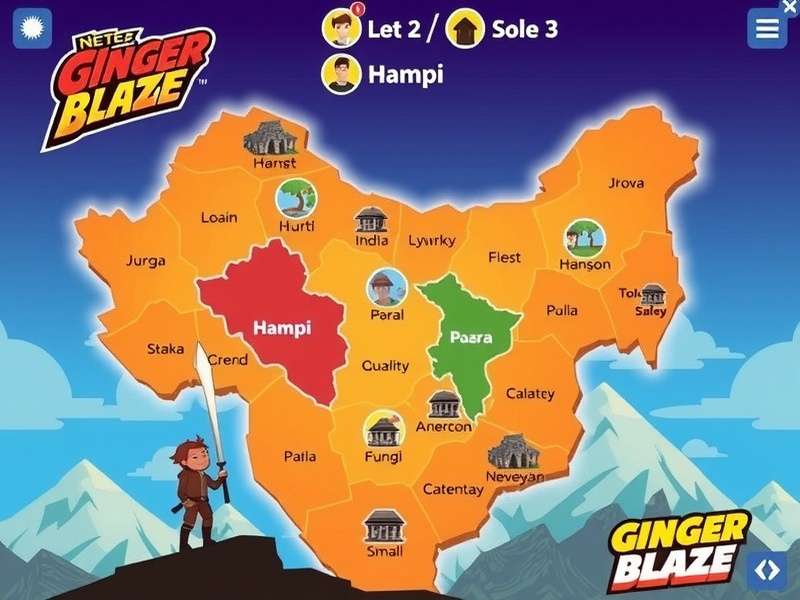
The expansive game world of Ginger Blaze Explorer, featuring 15 distinct Indian-inspired regions—each with its own unique geography, culture, and challenges 🗺️
5.2 Environmental Design and Aesthetics
The environmental design of Ginger Blaze Explorer is one of its most visually striking features. The game’s artists have gone to great lengths to recreate the look and feel of India’s diverse landscapes, using vibrant colors, detailed textures, and realistic lighting to create a world that feels both authentic and magical.
The game’s color palette varies by region, reflecting the unique aesthetics of each part of India. For example, the Himalayan region uses cool blues and whites to convey the cold, snowy environment, while the Rajasthan region uses warm oranges and yellows to reflect the desert sun. The Kerala backwaters use lush greens and blues to capture the serenity of the waterways, while Old Delhi uses rich reds and golds to evoke the city’s historic charm.
Textures play a key role in the game’s environmental design. The artists have used high-quality textures to recreate the look of different materials, from the rough stone of ancient temples to the smooth